
The FIFA World Cup 2026 schedule runs from 11 June to 19 July 2026, a 39-day stretch that is the longest and largest tournament football has ever staged. It is the first edition with 48 teams and 104 matches, spread across the United States, Canada and Mexico. That is a lot of football to keep track of, so this guide lays out the key dates stage by stage: the opener, the group stage window, the new round of 32, the round of 16, the quarter-finals, the semi-finals, and the final. If you want the wider picture first, our World Cup 2026 complete guide sets out the format, the hosts and the favourites in one place.
Quick answer
The FIFA World Cup 2026 runs from 11 June to 19 July 2026, 39 days in total. The opening match is on 11 June at the Estadio Azteca in Mexico City, featuring hosts Mexico. The group stage fills the first two weeks, the knockouts begin with a new round of 32, and the final is on 19 July at MetLife Stadium in New York/New Jersey.
The full stage-by-stage schedule
The 2026 tournament is bigger than any before it, so the calendar is split into clear blocks. The group stage takes the opening fortnight or so, then the field narrows through four knockout rounds before the final. The table below gives the windows for each stage. Exact kick-off dates for individual fixtures sit inside these ranges, and they were set once the draw and the play-offs were complete.
| Stage | Approximate window | Matches |
|---|---|---|
| Opening match | 11 June 2026 | 1 |
| Group stage | 11 to roughly 27 June 2026 | 72 |
| Round of 32 | Late June into early July 2026 | 16 |
| Round of 16 | Early July 2026 | 8 |
| Quarter-finals | Around 9 to 11 July 2026 | 4 |
| Semi-finals | Around 14 to 15 July 2026 | 2 |
| Third-place play-off | 18 July 2026 | 1 |
| Final | 19 July 2026 | 1 |
Those windows add up to 104 matches in all, the headline number for this edition. The dates inside each block depend on how the bracket fell after the group stage, so treat the ranges as the reliable frame and the day-to-day fixtures as the detail that fills it in. If the jump from 32 to 48 teams is new to you, our walkthrough of the expanded 48-team format explains how the groups and knockout rounds connect.
The opening match: 11 June
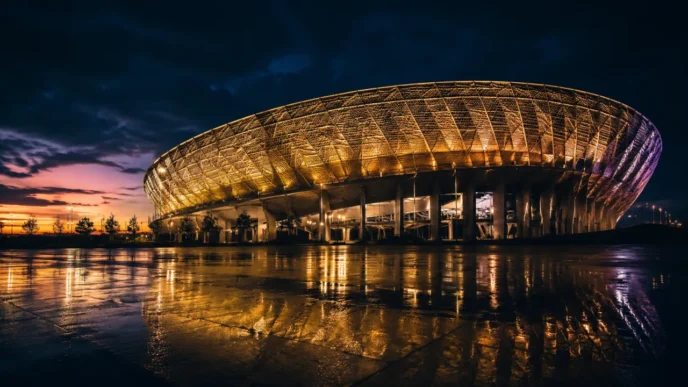
The tournament kicks off on 11 June 2026 at the Estadio Azteca in Mexico City, with hosts Mexico in the first game. The Azteca is one of the most storied grounds in the sport, and giving it the opener is a nod to that history. Mexico, as a host nation, took an automatic place in the field, which is why they were locked into the opening fixture well before the rest of the schedule firmed up.
Expect the build-up to dominate the first day or two. The opener tends to be cagey, since the home side carries the weight of a nation and the occasion, but it sets the tone for everything that follows. If you want the venue context, our piece on the stadiums and host cities covers the Azteca and the 15 other grounds in detail.
The group stage window: 11 to late June
The group stage is the heart of the calendar and the busiest fortnight of the tournament. With 48 teams in 12 groups of four, labelled A to L, there are 72 group matches to fit in. That means several games every day, often at staggered kick-off times across three time zones, so there is almost always live football to follow.
Here is how qualification out of the groups works. The top two from each of the 12 groups go through. On top of that, the eight best third-placed teams across all the groups also advance. That gives 32 teams into the knockout phase, which is where the new round of 32 comes from. The expanded format means a strong third-place finish can still be enough, so the final round of group fixtures carries real weight even for sides that have not topped their group.
The group games run from the opener on 11 June through to roughly 27 June. The exact closing date depends on the final fixture list, but the pattern holds: a fortnight or so of group football, then a short pause before the knockouts begin. The draw that set these groups was held on 5 December 2025 in Washington D.C., and the line-ups were finalised after the play-offs on 31 March 2026. For the mechanics of how the groups came together, see our breakdown of the draw and group stage.
The knockout rounds: round of 32 to the final
Once the group stage settles, the tournament becomes single-elimination. One bad night and you are out, which sharpens every match. There are four rounds before the final, and they thin the field quickly.
Round of 32
This is the new stage created by the 48-team format. The 32 qualifiers, the 24 group winners and runners-up plus the eight best third-placed sides, meet in 16 ties. It runs from late June into early July. For most fans this is the first taste of knockout drama, and it is where a couple of the bigger names usually get an early scare, if not an early exit.
Round of 16
The 16 survivors play eight ties in early July to reach the quarter-finals. By this point the weaker qualifiers have mostly been cleared out, so the matches tend to be tighter and the margins thinner.
Quarter-finals
Eight teams, four ties, played around 9 to 11 July. The quarter-finals are often where the tournament’s shape becomes clear, the stage where a genuine contender either confirms its credentials or falls short against a side playing above expectations.
Semi-finals
The last four meet in two ties, around 14 to 15 July, to decide the finalists. These are the matches that tend to live longest in the memory, win or lose. The two sides that come through book their place on 19 July.
Third-place play-off and final
The two beaten semi-finalists contest the third-place play-off on 18 July. The final itself is on 19 July 2026 at MetLife Stadium in New York/New Jersey, the closing act of the 39-day schedule and the match that decides the 2026 champions.
How to follow the favourites through the schedule
A long tournament rewards patience, and the schedule shapes how the contenders are priced. Early on, the markets lean on reputation and the group draw. As teams clear stages, the odds shift to reflect who is actually playing well and who has had the easier path. These long-range tournament prices are a form of futures betting, where you stake well before the outcome is decided, so the outright markets are date-stamped and a price you see is a snapshot in time rather than a fixed line. The longer the tournament runs, the more those prices drift as results come in, so it pays to check them stage by stage.
For context, here is an early-June 2026 snapshot of the outright favourites. If you are new to placing a wager on the tournament, our guide on how to bet on the World Cup walks through the basics. These are views, not certainties, and they move daily and differ between bookmakers. For a fuller breakdown of the contenders, see our World Cup 2026 winner predictions.
| Team | Outright odds (as of June 2026) |
|---|---|
| Spain | 5.75 |
| France | 6.00 |
| England | 7.50 |
| Brazil | 9.50 |
| Argentina (holders) | 10.00 |
| Portugal | 11.00 |
Argentina go in as defending champions, which always carries a certain weight, but the board is tight at the top. If you want to understand what those decimal prices actually represent, our explainer on how betting odds work covers the maths. The way to read these prices against the calendar is simple. A side with a kind group draw and an easier-looking round of 32 may be priced shorter than its quality alone would suggest, because the path matters as much as the talent. Longer-priced sides can offer real value too, which is the focus of our look at the World Cup 2026 dark horses.
All of this is why the outright board is worth tracking across the calendar rather than checking once. The World Cup winner odds at Campeonbet list each stage as it arrives, so you can follow a team’s route from the group window through to the knockouts without losing the thread.
Frequently asked questions
When does the FIFA World Cup 2026 start and finish? It starts on 11 June 2026 and finishes on 19 July 2026, a 39-day tournament. The opener is in Mexico City and the final is in New York/New Jersey.
What is the World Cup 2026 final date and venue? The final is on 19 July 2026 at MetLife Stadium in New York/New Jersey. The third-place play-off is the day before, on 18 July.
How many matches and teams are in the 2026 World Cup? There are 48 teams and 104 matches, both records. The teams are split into 12 groups of four for the group stage, then 32 advance to the knockouts.
What is the round of 32 and why is it new? The round of 32 is the first knockout stage in the expanded 48-team format. The top two from each of the 12 groups plus the eight best third-placed teams make up the 32 qualifiers, who then play single-elimination ties.
When is the group stage and when do the knockouts begin? The group stage runs from 11 June to roughly 27 June 2026. The knockouts then begin with the round of 32 in late June, leading into the round of 16, quarter-finals, semi-finals and the final on 19 July.
Conclusion
The FIFA World Cup 2026 schedule is long but easy to map once you have the stages in mind: an 11 June opener in Mexico City, a fortnight of group football, then four knockout rounds building to the final on 19 July in New York/New Jersey. Keep the stage windows as your frame and slot the individual fixtures in as they come. For the full picture of format, hosts and contenders, head back to our complete guide to the 2026 World Cup.

BetWise specialises in sports betting guides, betting strategies, odds, and betting market analysis. Through educational content and practical insights, BetWise helps readers build their understanding of sports betting and major sporting events.